Brands that bolster: Three social justice leaders share strategies for building brands that create momentum


Your brand is your identity. A clear sense of who you are, what you stand for, and what you exist to do—and the ability to communicate that externally—enables an organization to unite communities, reassure audiences, and energize movements. In an age of disinformation, AI-generated content, and eroding trust in institutions, a brand can act as a clarifying force. More than a logo and a snappy elevator pitch, branding at its best functions as a mission-critical set of tools that steer an organization towards impact.
As nonprofits across the country—especially social change organizations—face ongoing attacks on their work, they must show up in new ways as ever before. For some, this makes now a vital moment to update their brand, knowing effective branding can help cement their position and send clear, determined messages of perseverance. Here, we profile three social change leaders who recently rebranded with Big Duck, each taking a unique and deliberate approach to cultivate authentic, action-oriented identities and tools.
Strategy 1: Centering your community in your brand
 “We recognized that our previous identity and brand toolkit were not fully accessible and lacked clarity. We needed something new that could unite our audiences and serve as a call to action. As a member-based organization, it was essential to create a process that our community would champion and see themselves in.”
– Juanita O. Lewis, Executive Director, Community Voices Heard
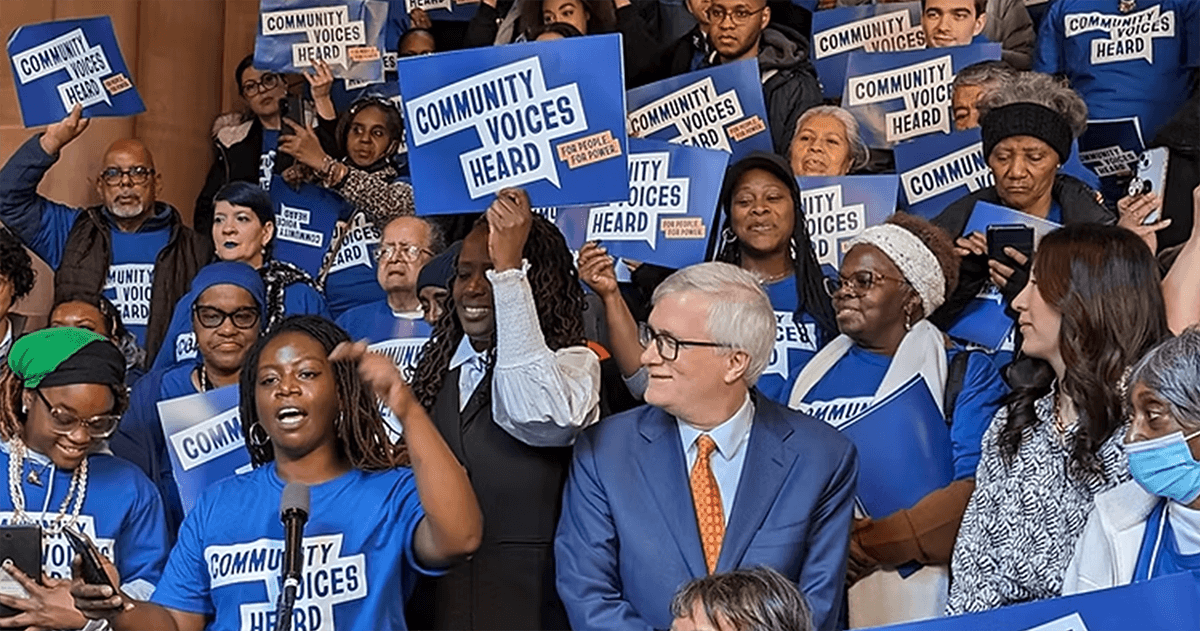
Community Voices Heard—a Black-led, New York-based, member-driven organization that advances racial, social, and financial justice, determined that they needed a new brand to more effectively build membership and change policies.
From the very first brand workshop, Community Voices Heard invited members to participate in the process to inform strategy and creative direction. They built touchpoints and collaborative input sessions to help their community understand how the brand was being seen and used, and to learn where their members saw the organization going in the future. Even spaces like a member barbecue presented an opportunity to bring the branding work in for feedback and socialization.
As a result of their deep community engagement, the new brand emerged more powerful and reflective of their members’ fiery spirit. The brand is also purpose-built to equip Community Voices Heard with the tools to mobilize. For example, as part of the rebrand, they created a short but mighty, values-driven tagline: “For people. For power.” The tagline uses alliteration and repetition and is designed as a rallying cry for members to speak aloud, expressing the heart of their mission. It is easy to translate into other languages, so diverse communities across New York can identify with the message.
A key visual anchor for the brand is an iconic typeface that unites their identity across digital and print. Even that choice is centered in community, reinforcing their historic and ongoing presence in the streets, as the typeface (named Bayard from Vocal Type foundry) is drawn from the signs of the 1963 March on Washington for Jobs and Freedom and is named after the civil rights leader Bayard Rustin, the principal organizer of the march.
In addition to the tagline and visual refresh, Community Voices Heard also created cohesive brand messaging, online, easy-to-use brand guidelines, and a robust set of templates built with free, intuitive software. Together, these brand elements bring unity and clarity to their efforts, putting the brand firmly in their members’ hands so they are equipped to take action.
PUTTING THIS STRATEGY TO WORK AT YOUR ORGANIZATION
For Community Voices Heard, their new brand works as an organizing tool, ensuring their community members are seen and heard—whether they’re marching on the streets or speaking with city government officials. The brand presents Community Voices Heard as a united and unstoppable force advancing equity for all New Yorkers.
To strengthen connections, gain momentum, and drive change at your organization, ensure you’re building your brand from the ground up as well. Authenticity and resonance with those who make you who you are should guide decision-making and shape every element of your brand. Ultimately, your brand reflects who you are, and your supporters should be proud to identify with you. As you shape your external identity, think about how your brand serves your community, and consider what they need to raise awareness, recruit new members, or fundraise. Perhaps you need to update your messaging so your community can better translate your mission, or maybe a new logo to better reflect what you stand for. By building a brand that equips your community to take action, you can fortify your organization’s voice and amplify your mission.
Strategy 2: Adjusting the dial on your brand’s volume with Future Currents
 “We intentionally kept a low profile for years. We didn’t have a website or any major collateral. We felt it was time to shake things up and make a bold move as we fight for the future we deserve.”
– Monisha Som, Communications Director, Future Currents
Future Currents (formerly Social and Economic Justice Project) is a resource, capacity builder, and collaborative space for leaders, co-created with power-building movement groups and funders to strengthen the progressive movement’s ability to anticipate crises and opportunities. As they thought about their next chapter, the big conversation centered on the organization’s name and presence. To determine the right volume, tone, and style for this moment, they engaged in a creative brand workshop, answering questions like “If your brand were a person, who would you be?” and “If your brand were a song, what would it sound like?” Exercises like these provided clarity and alignment, while also bringing play and joy into the process—vital tools for breaking out of a reactive mindset in challenging times.There are many exercises that can unlock creative thinking and begin to provide clues for finding the right name, color palette, and other integral choices for the brand identity at this point in an organization’s journey. Building playlists of songs that bubble up for staff and capture the sonic quality of the imagined brand, or inviting staff to imagine what animal or vehicle the brand would be, helps build cohesion among working groups and point the way forward.
Through strategic, collaborative, and imaginative conversations, it became clear that significant, proactive change was required, paving the way for a new, electric name—Future Currents—and a fresh identity to match. Their new brand is now a vehicle for a louder, more public force in the progressive movement, building toward a better tomorrow.

PUTTING THIS STRATEGY TO WORK AT YOUR ORGANIZATION
For Future Currents, a bold external brand was needed to respond to the moment and energize their movement to keep fighting for the world they are trying to create. To advance your organization’s work, consider the ways your brand may need to adapt. In times of instability, some organizations may find it is time to be louder than ever, while others may have to make the difficult decision to operate more behind the scenes. Depending on your issue area, available resources, community needs, and other factors, deliberately assessing how to modulate your brand presence is critical.
When making key decisions about your brand, ask yourself, your staff, and your community: how must we change to protect the future of our work? You may conclude that it’s time to reach wider audiences by investing in marketing and running more campaigns, or issuing public statements to make your position known, or maybe you choose to adjust your messaging to secure funding to sustain your vital work. At the end of the day, your focus should be on what truly matters: your mission and the people you serve. When in doubt, use your values to guide your decision. Any choice about how you appear in public should advance, not impede, your work.
Strategy 3: Embedding your brand in your mission with the Guttmacher Institute
 “When we began working on a brand refresh, the North Star was to build on the Institute’s recognition and make strategic changes in service of furthering our mission.”
– Jennifer Hoffmann, Director of Digital Communications, The Guttmacher Institute
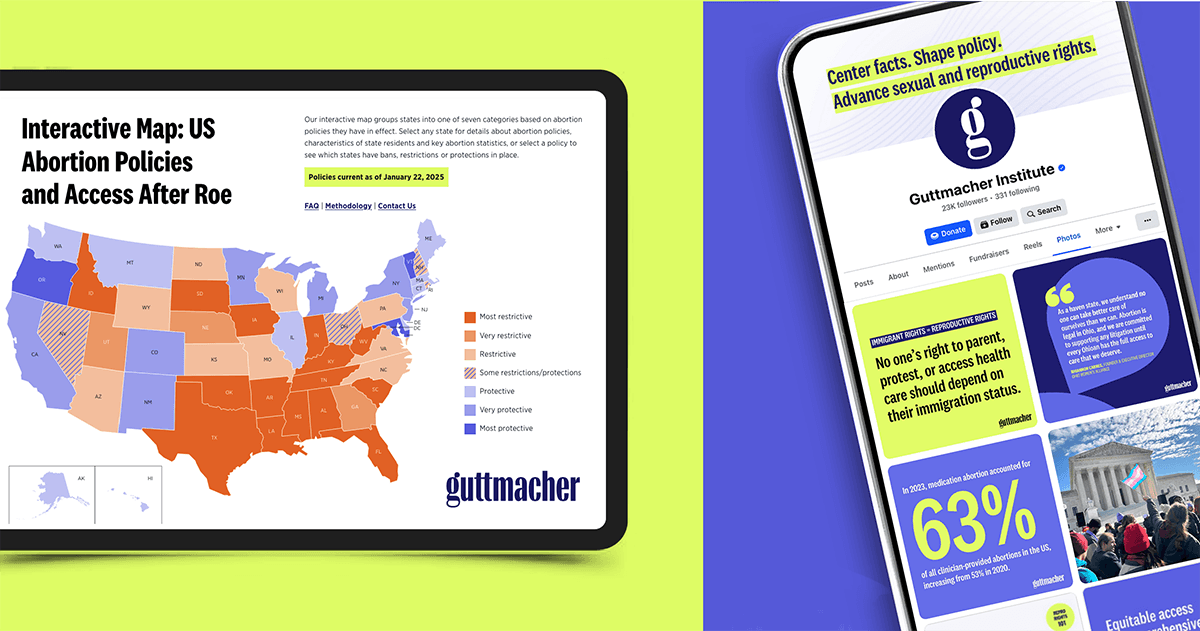
Mission and brand alignment came into focus for the Guttmacher Institute, a leading research and policy organization committed to advancing sexual and reproductive health and rights worldwide. With facts at the heart of their work, all decisions needed to be informed by a data-driven approach, with insights behind why specific shifts should be made and informing what would help move the needle to heighten their impact. Through extensive surveys, focus groups, and interviews, Guttmacher learned that their current brand perception was positive: they had a strong reputation as a rigorous, evidence-based, trusted, and dependable organization—so preserving the authentic traits that make them who they are was essential as they refined their external brand.Those insights, and others that emerged from the research, pointed the way to a brand refresh and introduced a clean, minimal, almost editorial brand with a type-driven logo that reinforces their credibility when conveying information about sexual and reproductive health that impacts people’s lives today. Guttmacher approached the development of its new brand toolkit primarily as a platform for informing key audiences and developed templates to deliver real-time, critical updates across all platforms. In addition, introducing a separate data and brand color palette to keep research distinct from marketing reinforces a neutral, impartial approach.Guttmacher is clear about its mission and who it is on the inside. Now, they use that knowledge more effectively to shape how they communicate externally, influencing the conversation and advancing sexual and reproductive health and rights.
PUTTING THIS STRATEGY TO WORK AT YOUR ORGANIZATION
For Guttmacher, a focus on facts and research helped reassure audiences and cement the organization as a guiding light in times of instability. If you find that your brand reputation and visibility are strong, and external audiences understand the unique role you play in advancing your mission, consider what changes—if any—can help you double down on who you are and boost your organization’s efforts. A tight connection between brand and mission means knowing with certainty what you want your brand to achieve.
Before making any major brand changes, take time to read your mission out loud with a new intention, considering the words in relation to your brand. Discuss with your team: Is your brand truly functioning as an extension of your mission? For example, your brand should emphasize who you are, reinforce your values, and help communicate your work. When analyzing your visual identity and messaging, ensure each piece aligns with how you want to be perceived and moves you forward. If there’s a disconnect, it might be time to refresh your identity to better represent your position in the landscape.
Use your brand as a tool for impact
Remember, your brand is your identity—it encapsulates all of the thoughts and feelings audiences experience as they engage with you. In times of instability, people want to know which organizations they can trust and turn to to take action. Prioritize and recognize the power of your brand in this moment—and consider if a rebrand or a refresh could be what you need to strengthen your organization and succeed. By branding with intention, you can strengthen your organization’s communications and connect with your audiences in powerful ways, creating hope and invigorating supporters to help you advance your mission despite challenges.
For more of a behind-the-scenes look at the branding process for these three organizations, watch this webinar we hosted.