Why should funders invest in grantee communications capacity?


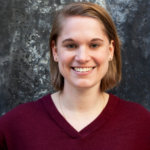
What does it look like when a foundation goes beyond grants to strengthen nonprofits? Ally Dommu, director of service development, and Brittany DeNovellis, capacity building program manager, at the T. Rowe Price Foundation, share how communications capacity building can deepen impact at your organization.
Transcript
Ally Dommu: Hello, and welcome to the Smart Communications Podcast. I’m Ally Dommu, director of service development and a worker-owner at Big Duck. I’m excited to be here today with Brittany DeNovellis from the T. Rowe Price Foundation. We’re going to discuss the Foundation’s capacity-building program for nonprofits, how they developed their program and why, and share insights today for funders looking to build their capacity-building program with nonprofits. So, before we start chatting a little bit more about Brittany. Brittany is the capacity-building program manager for the T. Rowe Price Foundation. The T. Rowe Price Foundation supports the growth of strong nonprofit leaders, organizations, and nonprofit networks. The Foundation was founded in 1981 and has since given over $194 million in direct grants and matching gift contributions. At the Foundation, Brittany’s role is end-to-end event production for their no-cost professional and organizational development opportunities for nonprofits in Baltimore and beyond. She’s been in that role for five years. These offerings take the shape of free webinars, cohorts, assessments, and other opportunities to bring nonprofits together to learn and strengthen their capacity. And in her spare time, Brittany teaches calligraphy. She’s active in her local chapter of the National Association of Asian American Professionals, and she’s been involved in the nonprofit sector since 2010. Welcome to the show, Brittany. Thank you so much for joining me today.
Brittany DeNovellis: Thanks for having me on, Ally.
Ally Dommu: I’d love to start with just hearing what led the T. Rowe Price Foundation to invest in capacity building for its nonprofit partners in the first place.
Brittany DeNovellis: Yeah, the Foundation has always believed in making sure that the communities where T. Rowe Price associates live and work are thriving places for communities and associates. And basically back in 2017, right after the unrest in Baltimore, we actually at the same time had a new foundation president come on, Dr. John Brothers, and he really did a listening tour that involved speaking to a number of nonprofits in the city and really just sort of created the basis of how we wanted to continue to operate. The Foundation, like you said, has operated since 1981 and has been focused a lot on direct grants and matching gifts for associates. But Dr. Brothers really had this sort of expanded vision of how we could assist nonprofits.
Brittany DeNovellis: So, part of that was organizational capacity building with the idea in mind that you can just give, you know, an organization a check, that’s fine, but that’s very transactional. But you could also help the organization invest in its own learning and its own capabilities, and have them sort of be able to identify what things they need for themselves as well as what kind of opportunities they might need to grow stronger. And so if we were able to partner with them, to listen to them and be able to be a source of, you know, sort of also having a high level view of what all these different nonprofits in Baltimore City were doing and bring them together to share knowledge, resources, et cetera, then, you know, we’d have stronger nonprofits, stronger leaders, stronger communities, because a lot of nonprofits unfortunately, suffer from this sort of like nonprofit starvation cycle where they’re spending so much time executing their programs and figuring that out, and it’s very day-to-day what’s on fire, that type of thing, that this can really help nonprofits take a step back, focus on the bigger picture, you know, create strategy, and really have a strong operating structure.
Brittany DeNovellis: You know, especially being connected to T. Rowe Price, it like has a lot of parallels, I think, with how T. Rowe invests in companies. You know, it’s not just, “Okay, what are you producing? Like what widgets are you making out in the world?” But also, “How are you operating? How are your leaders? Like what are your financials?” What are all the different components that make up a strong organization?” Because when an organization is strong, we know that then it’s better able to deliver on its mission to the community, and then the communities become stronger because of that. So that’s sort of how the capacity program got started in 2016, 2017. And then since then, it’s grown. Originally it was just for foundation grantees as we sort of tested and learned, “Okay, what are people looking for? What do they need?” And we were doing a lot of in-person events. And then by 2020, when the pandemic hit, we switched to being, you know, all virtual, like many other opportunities. And we were able to expand our reach beyond Baltimore, which has been great.
Ally Dommu: Amazing. And you were kind of alluding to that with your capacity-building goals. It’s actually coming from what are you hearing from the nonprofits that you fund? What are you hearing from how people are sort of identifying what are their goals for capacity building? And it sounds like kind of like listening and being responsive to the nonprofit sector in Baltimore and beyond is sort of like embedded into how you think of this part of your work. So I’d love to hear a little bit more about that. Like how do you at the Foundation gather input from the nonprofit sector about what they might need to work on, or what kinds of capacity-building offerings, trainings, assessments, that sort of thing are of value to them? Or how do you make decisions about that at T. Rowe about what to focus on?
Brittany DeNovellis: Yeah, thank you for that question. I think listening and feedback is just a big part of our culture. We’re also, you know, trying to constantly be learners. And we feel like that’s a way to be a really strong organization ourselves. And that’s, we try to emulate what we want to see in the world. We want to also see nonprofits listening really strongly to the people they’re trying to serve and having continuous feedback loops. So let’s see, in the very short term, you know, after every capacity building offering that we do, we’re always asking for feedback surveys. I’m the one who shows up at every event and sort of begs or ask the, ask our you know, our subject matter experts to ask people to fill out the surveys in real time so that we just get that rapid feedback about what worked, what didn’t. So we can always learn from that.
Brittany DeNovellis: On a more annual basis, we’ve been doing capacity building surveys out to our whole network and everybody on our capacity building mailing list, and trying to get feedback from the people who respond. So we take that into account, and then what we do is then sort of reflect on that data with the subject matter experts that are our vendors and that put on these trainings. One year, we had a really great representative council of nonprofits who also helped us sort of further refine the survey and help us interpret the results. And so we just try to keep that feedback loop going.
Brittany DeNovellis: And then initially the other thing that the Foundation does as a whole, not just as part of the capacity-building program, is another sort of like survey out to the Foundation grantees about, you know, how we’re doing, bedside manner, like, how are we interacting with you? What do you need from us? So we’re always just using a multitude of listening tools to be able to get into what people need. Or in some cases, we also gather external data. We did something called a State of the Sector report back in 2022, where we took all of our previous data and tried to sift through it to learn more about the state of the nonprofit sector.
Brittany DeNovellis: And one part of that was the iCAT assessment or the Impact Capacity Assessment Tool. And that is actually something we offer free to any nonprofit majority based in Maryland. Sometimes we do a few outside of Maryland, but it’s this great organizational assessment tool that’s offered by Algorhythm, and it’s an organizational health checkup, basically. So it’s an anonymous survey that you can send out to your stakeholders, your board members, and the leaders of your organization. And it asks between 120 to 150 questions about different capacities that are sort of known field capacities that of organizational strengths. So whether that’s leading, learning, resource generation, managing, and there’s a few others in there that I almost forget. But the iCAT will give people back on a scale of one to 100, where everybody in their organization sort of thinks they are on specific capacities and sub-capacities.
Brittany DeNovellis: So we always learn that, like through the iCAT, we can tell that most organizations, at least that take the iCAT with us, are sort of lower on their resource generation capacity. So marketing and board fundraising, usually these people are usually higher up on partnerships, but you know, it varies on their grant-making capacity. So we know that that’s always an area of challenge for nonprofits, and we can also note that everybody wants more money, but it’s connected to some of those other capacities for how you can strengthen your resource generation capacity. So, you know, our solution isn’t just to offer more money and more grant writing workshops, and you know, what’s what’s traditionally out there. So we think we want to focus on, you know, how you improve your business models and strategic planning. So we want to focus on sort of the bigger picture that might overall help you be able to get at the resource management capacity.
Ally Dommu: So it sounds like a lot of what you offer is really like in response to what you’re learning from these assessments and through all these surveys, which is so great. It’s not about, it sounds like it’s not about “What does the Foundation think that nonprofits need or grassroots organizations need?” It’s “What are nonprofits in our region telling us that they are struggling with?” Or “Where their strengths are? What they want to grow and invest in to?” Which is such an important cornerstone of, you know, a partnership is that listening piece. And it sounds like you have structures in place for doing that really consistently. And you mentioned that a consistent theme that you hear across all this listening is that nonprofits are struggling with the resource generation and marketing pieces in particular. And you’re hearing that, you know, from organizations, and they know you are a significant funder. So can you share a little bit about what actions the Foundation took, you know, as a result of kind of like this consistent theme of organizations struggling with their fundraising, struggling with their resource generation? What are some of the ways that your foundation has responded to meet that need from nonprofits?
Brittany DeNovellis: Yeah, thanks for that. One flagship event that was developed probably seven or eight years ago as well, is a local design fest in collaboration with Maryland Institute College of Art. And so that’s sort of the idea of a one-day design-athon, sort of modeled after a hackathon where we bring together both, like, seasoned designers along with MICA students and other community members and put them together into teams. And then they do just a one-day event. We scope out about 15 nonprofits to participate, and then they just get to work on one day and try to help improve whatever design problem or marketing problem that a nonprofit may have. So sometimes it’s like, “Okay, we made this logo like on a whim because we needed a logo and now we’re in need of a whole like, branding kit or style guide because we’ve just been operating off of, you know, everything and everywhere”. You know, “We’ve been really just like put band-aiding it all together.” Or sometimes it’s like wireframes for your website or just really getting that sort of like design perspective that a lot of nonprofits aren’t, you know, again, they’re, a lot of them are just here to do the work. You’re here to do the programs, but the process of design thinking or working with designers can be really illuminating for nonprofits. And it also teaches the designers, I think, a lot about what like, some of the community needs are and how nonprofits are operating. And so we really see that as a great one-day intensive learning opportunity for everybody.
Brittany DeNovellis: And then, you know, one of the reasons we worked with Big Duck is because we wanted to offer workshops, whether webinars or cohorts, and other opportunities to nonprofits to develop those capacities related to research generation, marketing, and storytelling. So, we’ve done webinars on social media and reaching your audiences, interviewing your audiences, and gathering, like how to approach donors. We’ve done different cohorts together. So part of our, you know, capacity building budget every year definitely goes toward like that storytelling and communications because, you know, a lot of nonprofits are their own best-kept secret, and we don’t think it should be that way.
Ally Dommu: So you’ve offered a bunch, and it’s been such a pleasure to partner with T. Rowe. And we’ll link to a case study of our work together because we have, working with Big Duck we have this growing area of training work, and T. Rowe has been a partner over the last few years. We’ve offered, as Brittany said, cohorts, we’ve done some webinars, we’ve done full-day trainings, focused on year-end fundraising campaigns and donor communications, all that kind, that kind of thing. Can you share a little bit about how you decide what kinds of offerings to plan for your community? Like, you know, when is a cohort model a good fit? And when do you choose to do webinars? What kind of mix have you found to be effective for your community?
Brittany DeNovellis: So I think we, we do it based on just sort of the general year layout, almost. And we want to have a continuous mix of both webinars, cohorts, and in-person activities, especially now that we can be back in-person. I think of it as sort of like a funnel, as well, too. I’m not also like, maybe in as much in the marketing world that, you know, we have our whole universe of people. I feel like a lot of times, like a webinar can be that first step, you know, first taste of, “Okay, do we like Big Duck? Do you like the content that they’re providing? Like, can you step into it this way, just an introductory taste?” And then a lot of times, then we’ll offer as the follow-up more intensive, like a cohort or a one-day opportunity now that people are more familiar with the vendor and sort of like, what might potentially be offered at the end, or, you know, they, people might say, “Oh, okay, like, I had a lot of engagement at this webinar, so now I’m ready to do this.”
Brittany DeNovellis: So we try to do a combination of both activities to sort of get people into our, you know, our funnel for good. You know, a lot of people are like, “Wait, and then we’ll do coaching?” Sometimes even at the end of a cohort opportunity, because, you know, it’s so easy to just sort of learn something and absorb it, and then we want people to be able to actually implement it. So we’ll offer coaching, and yeah, like you’re saying, it’s like sometimes people are like, “So how much is this coaching?” We’re like, “No, it’s still, it’s still free. It’s just part of like, the additional thing.” So, you know, I know it’s like a tactic a lot of marketers or companies use, but yeah, we’re just using it too, to build those relationships and provide the capacity building that otherwise might cost people a lot of money that we can provide. And it’s just one of those ways that we’ve tried to have that more relational rather than transactional interaction with nonprofits in our community.
Ally Dommu: Awesome. And I’d love to hear like, how do you know when this kind of offering is working or making an impact? And can you share any kind of like anecdote or maybe short story of something that comes to mind of “Oh wow, this, this stuff was sticking or making an impact” for your community?
Brittany DeNovellis: Yeah. a lot of it is, you know, again, like sort of based on those feedback surveys and comments, we’re using like a net promoter score. So usually after an event, we’re asking: On a scale of one to 10, you know, would you recommend this to a friend or a colleague? And what’s the reason? And then we’re sort of gathering feedback. I mean, it could just be bias, obviously, like we’re offering something free. People love free things. But my general sense is that people, you know, you, it could either go either way, but the majority of those comments are really positive. We have really positive net promoter scores, and I try to attend almost every, I mean, I’m there in the background of almost everything. And so a lot of it is just that feeling in the room. Like, are you seeing people connect with each other? Are they asking questions? Is there engagement? And so, yeah, I don’t always have like the greatest examples of like very long-term things, but you know, from like Design Fest we’ve seen, “Okay, now this logo’s out in the world or this, this collateral has gone out and it’s being used.” So, really, we’re relying on some of that near-term feedback and just what we’re hearing from nonprofit partners about, like, “Oh, this is useful, like, please keep doing this.” So yeah.
Ally Dommu: And then my last question is for any organizations or foundations listening that might be interested in building out a capacity building program, maybe they have been really, you know, exclusively really focused on the grant making side, but haven’t explored this additional way to support nonprofits. What is, you know, a piece of advice that you’d share just to kind of help them get started with thinking about this?
Brittany DeNovellis: Yeah, I think the idea of continuing to listen is a good one. Survey, see what’s out there, sort of do your research. You know, again, like do you want to, you don’t want to necessarily replicate what’s already existing out in the world, like find the unique space where you can do it. Obviously, there’s a lot of great providers out there, so just start small. Test. Do like you would any other program, hopefully. And find out what is going to really resonate with your community and continuously improve upon that.
Ally Dommu: Great advice. I love it. Start small and test. Well, thank you so much, Brittany. Thanks for joining today, joining our podcast. We really appreciate you bringing these insights to Big Duck’s audience. So we’re going to be sure to link to the Foundation’s website. We’ll link to that case study of Big Duck and T. Rowe Price Foundation’s partnership from Big Duck’s website. And thank you again, we’re so glad that you’re able to join us.
Brittany DeNovellis: Thank you so much, Ally, really appreciate it.
Ally Dommu: Bye, everybody.