How do you approach rebranding a 100-year-old nonprofit?

Insights from a major nonprofit rebrand! Join Ally Dommu, director of service development, and Brad Drazen, vice president of communications and marketing at Greater Hartford Gives Foundation, as they unpack the motivations behind changing a 100-year-old foundation’s name, the research and collaboration that guided the process, and what other organizations and foundations can learn when considering a rebrand.
Transcript
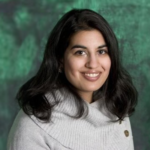
Ally Dommu: Hello and welcome to the Smart Communications Podcast. I’m Ally Dommu, director of service development and worker-owner at Big Duck. I’m really excited to be here today with Brad Drazen from the Hartford Foundation for Public Giving. So, Big Duck has been partnering with the foundation on a comprehensive rebrand for the last year, which has included a name change. And by the time this episode airs, their new name and branding will be out there to the public. You could check out their new website with their new brand. But today we have the opportunity to talk to Brad about his organization’s rebrand journey, partnering with Big Duck, why this 100-year-old community foundation decided to rebrand, and just hear some insights and lessons learned that might be relevant to others considering a rebrand or other foundations out there thinking about maybe changing some aspect of their identity.
Ally Dommu: But before we start chatting with Brad, a little bit more about him and his role at the organization. So Brad Drazen is the vice president of communications and marketing at the Hartford Foundation for Public Giving, leading the organization’s community, media relations, brand strategy and awareness, and donor communications. Previously, Brad spent 20 years as a television news anchor, reporter, and producer, garnering several honors for his work, including a DuPont-Columbia Award, a Peabody, and five Boston/New England Emmys. Brad has a bachelor’s degree in Drama and English from Dartmouth College and an MBA from UCLA Anderson. So welcome to the show, Brad. Thank you for being with me today.
Brad Drazen: Thanks so much, Ally. It’s great to be here. What an honor.
Ally Dommu: Yes, this is fun. We have worked together so much over the last year, but this is our first time where we’re going out to the public with the story, right?
Brad Drazen: Right. Yeah, it’s exciting.
Ally Dommu: Yes. So as I mentioned, Big Duck has been partnering with the Hartford Foundation for Public Giving, which is a community foundation based and centered in Hartford, Connecticut, but expanding to 29 towns in that Greater Hartford region. And we’ve worked with them on a real comprehensive rebrand, which has been timed with their centennial, their 100-year anniversary from being founded in the Hartford area. And our work with them wasn’t just, you know, a visual refresh, not just a logo. It involves, really, you know, thinking about how do they want to be perceived in the community. How should their identity be updated? Everything from their name, to their tagline, visuals, messaging, and really to better reflect the impact that they’re having, the work that they’re doing today, how they’ve evolved over their 100 years, so that their brand is really reflective of the work that they’re doing.
Ally Dommu: So, I wanted to start this conversation with the “Why?” Like that’s a big change, changing the name of a 100-year-old organization. You’ve put in, you know, a lot of work, the relationships that you’ve had over 100 years. You know, what we learned was, you know, there was a significant amount of name recognition, but still some confusion about the work that you’re doing as well. So, I’d love to start from the beginning, you know, what kind of prompted you to take on, you and your team, something as significant as a complete name change and rebrand at this milestone moment? What was the “Why?” driving this decision?
Brad Drazen: Yeah, it’s a big decision in a lot of ways to even embark on this journey, let alone take the year-plus journey with you and the rest of the team. But the reason is simple in a lot of ways. So my boss, our CEO Jay Williams, came here about two years before I did. So he arrived in 2017, and he came so enthusiastic (he had been working in the Obama administration for quite some time, had been a mayor of a small city in the Midwest) about this organization that had been around at that point for 90 plus years and had made a huge impact, had put hundreds of millions of dollars into the community through the nonprofit partners. And when he got here to introduce himself as the new CEO of the Hartford Foundation for Public Giving, people looked at him and with that kind of head tilt, like, “The CEO of what?” And, you know, he makes a joke that he almost like packed up his stuff and went back and and left because it was hard for him to grasp how many people over the years, including more recently, that when you say “The Hartford Foundation for Public Giving,” even people that have lived in this community their entire lives, there is a lack of recognition of this organization among a group of people, business leaders, folks not directly involved in the nonprofit community, but even some folks that are volunteering as lay leaders in the nonprofit community. There was not a deep and broad awareness of our organization, let alone what we do.
Brad Drazen: So that was how we started to think about this. And there were some specific things about the name that we have felt for a long time were both a barrier to cutting through the clutter, and a barrier to understanding who we are and what we do. So, for instance, the name of Hartford Foundation belies the fact that we’re a regional organization, and we would get a lot of questions from the stakeholders that we were working with. You know, “Are you just focusing on helping to solve problems and improve the quality of life of people in Hartford?” And, of course, the answer was “No”. And in fact, it was founded as a regional organization. The region has grown since 1925, but it has always been a regional organization. We knew that was a challenge.
Brad Drazen: The other thing, Ally, that I know that we talked about a lot during our process was the fact that one of the largest organizational institutions in our community is called The Hartford. It’s a major insurance company. Most people that listen to this will at least be familiar with that name. They’re still one of the largest employers, and they don’t have an independent foundation arm. So a lot of people thought we were the foundation arm of that insurance company, which could not be farther from the truth. And finally, this idea of public giving. We have been the only community foundation or foundation of any sort that used, what I believe is probably an antiquated phrase, that in 1925, maybe resonated with people, and has created some confusion about, does that mean we give to the public? Do we, do we make grants to individual people? And the answer to that question was “No.” Or whether we were in some way a government entity because the word public was in there. So we knew from the jump that the name was problematic. And so we knocked on your door at Big Duck and said, “How do we work through this? How do we get to what could be a really evocative name, but also truly represent both the geographic footprint of what we’re doing and crystallize what it is to be a community foundation?”
Ally Dommu: Yes. And through many rounds of name ideas and, you know, input from your staff and from your board and from community members over months, it took us to kind of circle around a potential new name. And I know, in the beginning of working together, there was this recognition that was research-informed, touching on what you just said. You know, there are these challenges with the name, openness to a name change, but exactly where we would end up, that was an unknown, right? Were we going to do something more of an evolution, you know, something small, like a tweak, maybe to address a couple of those challenges? Or are we going to do something that was a little bit bigger or more radical, that was a real start from scratch? And we ended up more in the latter.
Ally Dommu: And so I’d like to take a second just for our listeners to introduce the new name of the organization and share a little bit about that, and welcome you, Brad, to share a little bit about why this name. So the new name of the organization is Greater Hartford Gives Foundation, or Greater Hartford Gives, for short. And a little bit about that is that, well, first, I will share that our working group really aligned on this name, I think from the very first presentation of options that we worked on. We looked at many, many, many names, but this one always stood up to the top. The, you know, action-oriented nature of it: Greater Hartford Gives. It’s, you know, it was really an invitation for people to see themselves as part of the community of donors, of givers. Not just through philanthropy, but through volunteerism, bold ideas, collective support for the community. And that the name really is like a promise to the community. It’s one that reflects the generosity, the strength, and shared commitment of the entire region.
Ally Dommu: And we like to talk about how the name, Greater Hartford Gives, it’s bi-directional, and it clarifyies what is a community foundation? A community foundation does so much more than giving, but the resources that are generated are from the community. What makes a community foundation different from other kind of forms of private philanthropy is that individual donors and supporters in the community are pooling their resources. And then the foundation, with input from the community, then distributes out those resources to the biggest needs and some of the nonprofits in that region. So there’s this bi-directional nature that is embedded into the name. You know, thinking back to those early conversations, Brad, and even just the journey, why do you think that the team aligned on Greater Hartford Gives? What was it about it that stood out as something that would really work as this new identity to represent the organization?
Brad Drazen: I’m going to go back half a step further and remind you that when we did an early exercise on kind of the continuum of evolutionary versus revolutionary, we had a team of 10 folks within the organization representing a cross section of functional expertise, whether they were fundraisers or program folks, making the grants. Early career and more advanced career, different levels in terms of the org chart, et cetera. And we put Post-its on that, that continuum. And my Post-it was the closest to evolutionary, to have a kind of a modest name change. And the predominant view was “If we’re going to do it, let’s really do it.” And that inspired us to push the envelope. And so when we saw Greater Hartford Gives as an early opportunity, you touched upon some of the things that are really important, special, and I think intriguing about the name. The bi-directional nature of the giving is so important in terms of the community foundation’s place within a geographic area.
Brad Drazen: You know, for those listening, I know this is a high-information audience, but community foundations nationally have a little bit of an identity crisis in that it’s hard for folks broadly to understand what a community foundation is and does. The idea of bi-directional giving, that we can’t give out to the nonprofits unless community members who have a stake in the success of Greater Hartford––that live, work, or play here, even folks that did so and have left, but feel a connection to the geographic region––if they don’t make financial contributions, we can’t then, in turn, put that money out to the nonprofit community to help improve the quality of life, particularly for people who have the least. So that was really, really exciting about it.
Brad Drazen: The other thing about it that we think, you know, perhaps it’s my, I’m not the most risk-averse person, but in this case, I seem to be. So if you look at the, the words in the, in the original name for the first 100 years, Hartford Foundation for Public Giving, and now we have almost, we’ve almost shaken up the words and let them fall into a different order. We added the word Greater to better capture the regional nature of our work. Hartford is still at the center of our region, and it’s literally the center of our name. And Giving and Gives, it’s just changing the part of speech, but that’s still based on the old name, which I think gave people additional comfort with it. And as you pointed out, our official name is the Greater Hartford Gives Foundation. We are using Greater Hartford Gives as kind of our marketing name. It’s easy to wrap your arms around. I think it’s a phrase that philanthropically minded people, people who are interested in and aware and want to do something beyond their own kind of nuclear family’s benefit, can hear the word Greater Hartford Gives and say, “I think that’s me. Like, that’s a kind of organization I need to be connected to.”
Brad Drazen: And that is one of the goals of the rebrand. We believe there are tens of thousands of potential stakeholders who live in our region that currently aren’t aligned with the Hartford Foundation. Not because they don’t believe in what we’re doing, because they don’t have the information about what we’re doing, and how our view of the world is so much in sync with their view of the world. And we’re really excited about this opportunity to bring in literally tens of thousands of new people into our work to better understand how they can help us affect positive change across Greater Hartford.
Ally Dommu: Yep. And I know we had lots of grounding conversations as we started the work with defining your brand goals and your communications goals, and your audiences. It was really about how do we make sure that this organization is, you know, not perceived as an ivory tower? That you are very much based in the community, have always been, and you are a foundation and an organization that is welcoming and inclusive to all. Whether those are your nonprofit partners, potential donors, volunteers, those that lend their voice into your community-based giving efforts. There are so many ways and tentacles that you all have out into the community, and you want to continue to, kind of, extend those and make sure that you are relevant to even more people. So that was definitely a driving force.
Ally Dommu: In addition to the name, you know, we worked on visual identity, we worked on tagline, we worked on key messages, we worked on a rollout plan. We worked on what we call a brand architecture: how are all the different programs that you run, how does everything tie back to a consistent brand? So there are a lot of different pieces to it. So we’ll be sure to share more as we put together the show notes as this brand comes to life, so that our audience can follow along. But as a final wrap-up question for others listening, maybe they’re contemplating a rebrand, maybe they’re rebrand-curious, maybe they have gone through a rebrand in the past, especially those who might worry about losing brand equity, right? Because that is a major, you know, question here is: is it worth it? Like, we have this equity in our name, we need to kind of put this new foot forward. What advice would you give them based on your experience?
Brad Drazen: It’s a great question. I’m going to answer for internal and kind of more externally facing. The internally facing piece would be: If you do embark on this, I do think the reason we got to the positive result that we did, and we’re getting the buy-in from within the organization, is because we approached it with a multidimensional, cross-functional group of folks who came to the work from very different angles. And I think that created a wonderful dynamic within the work and then improved the buy-in, in the long run, from the other staff who weren’t at the table during that session.
Brad Drazen: In terms of externally, I do get the fear of losing brand equity. And we believe that we are not going to lose any stakeholders who are already with us. One of the things about this we need to clearly communicate is: the work isn’t changing. And so, for the people who have been connected to us and interested in partnering with us in a multitude of ways––whether they’re donors, nonprofits, policymakers––our work isn’t changing. We’re are not going to disappoint them in any way. And we believe for those people after 90, 120, 180 days, it’s just going to be our name. The work won’t change. For the people that we can bring into the fold over the next many months and years. It is only going to put out more deeply and broadly into the water, so to speak, of Greater Hartford, this idea of an organization that sits at the epicenter of all these different influences on quality of life in Greater Hartford. Particularly for assisting, creating opportunities where there have been barriers before for members of our community. We can be the clearinghouse for that, knowing that we don’t do any of our work on our own. It’s all done in partnership. We’re going to bring in thousands more partners effectively to help you used the word relevance, to help keep us relevant, to bring in new stakeholders, maybe even younger stakeholders, to help maintain this organization in perpetuity. And that’s how we and all community foundations are founded. So it’s a really exciting moment for us, and we are all in on this.
Ally Dommu: I’m so excited to see how it all comes to life. And I know it’s going to be great, as the work that you do is so impactful for the communities that you work in. So Brad, thank you so much for joining us today. It’s been truly a professional honor to be able to do this branding work with the Big Duck team and the whole team over at your foundation. We’re going to link to your website, because in addition to launching this brand, you’re launching a new website all timed together. This is a big undertaking. And we’ll see you again. Thank you for listening.
Brad Drazen: Thanks so much, Ally.