How can you engage in participatory grantmaking?
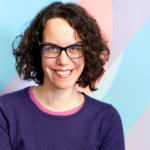

What happens when funders shift decision-making powers to communities? Farra Trompeter is joined by Cynthia Gibson, PhD, principal of Cynthesis Consulting, and Kelley Buhles, independent consultant and owner of Buhles Consulting, to discuss participatory grantmaking and explore how sharing decision-making power with communities fosters stronger, more democratic philanthropy. They also outline the steps nonprofits and funders can take to initiate this approach.
Transcript
Farra Trompeter: Welcome to the Smart Communications Podcast. This is Farra Trompeter, co-director and worker-owner at Big Duck. In today’s episode, we’re going to ask the question: What can we learn from participatory grantmaking? And I am delighted to be joined by Cynthia Gibson, PhD, and Kelley Buhles. Cynthia uses she/her and is principal of Cynthesis Consulting, which provides strategic planning, program development, evaluation, and communications assistance to hundreds of US and international philanthropic institutions and nonprofits. She writes about civic engagement, democracy, and education, and recently co-authored the book Participatory Grantmaking in Philanthropy. Cindy was a senior fellow at Tufts University and served as a member of numerous committees, selection panels, and boards. She was also an adjunct professor at the Milano School of Policy Management and Environment at the New School where she taught a class on advocacy and probably others, but I took that class 20 years ago, and I’m delighted to be back in conversation with her. Cindy, welcome to the show.
Cindy Gibson: Thanks, Farra. Always great to see you. Big fan of yours, who isn’t? And Big Duck as well.
Farra Trompeter: Likewise, likewise.
Cindy Gibson: One of my favorite organizations.
Farra Trompeter: We had a great conversation about, you know, 18-and-a-half years ago, before I took this job. And thank you for being a mentor and a friend who helped me make this decision.
Cindy Gibson: Very exciting to watch your career.
Farra Trompeter: So let me tell you about our other guest, Kelley Buhles. Kelley also uses she/her pronouns and is a consultant working at the intersection of philanthropy and the new economy movement. She is a participatory grantmaking practitioner, having practiced for over 15 years and helping organize the international participatory grantmaking movement. She’s especially excited by the models that explore non-competitive options. She loves unpacking the traditional assumptions that exist within philanthropy and finance and exploring new ways to be in community around money that creates liberation for everyone. She is a Just Economy Institute Fellow, a Transformative 25 committee member, and a Salzburg Global Fellow. She also describes herself as “a boring revolutionary”, which I find quite amusing. Kelley, welcome to the show.
Kelley Buhles: Thank you. Thanks for having me.
Farra Trompeter: I’m not sure how a revolutionary could be boring, but I will let you describe yourself that way. I feel like there’s probably a better adjective out there.
Kelley Buhles: Well, the boring revolution refers to sort of the boring work of unpacking the legal and entrenched financial structures that exist. And often in order to break them down, you have to, you know, read a lot of IRS code, which is quite boring. So yeah, we call it the boring revolution because it’s often boring.
Farra Trompeter: I get it, I get it. Well, I’m glad that you do it because I would indeed find that a bit boring, but I’m glad that you are into the tedious. We need that in the revolution. Alright, well, let’s get into it. So, I understand that participatory grantmaking is about shifting power from top down to bottom up by centering the voices of those directly affected by problems or crises, getting philanthropy to make better decisions. Cindy, what about you? How do you define participatory grantmaking in your own words?
Cindy Gibson: So, a few years ago, I had the privilege of being a co-author with some participatory grantmaking experts around the world and practitioners that pretty much lays out how to do this part and some case studies and tools. And in that publication, we landed on the following definition of participatory grantmaking, which is “Seeding decision-making power about funding decisions, including the strategy and criteria about those decisions to the very community a foundation supports.” So, there’s a couple things I just would add to that, that probably this doesn’t capture as well. First of all, I think it’s really important that people land on this part of the definition that, “Oh, it’s all about making grant decisions.” I think it’s important for people to remember that grantmaking is a process. It involves setting priorities, strategies, funding criteria, all those kinds of things are entry points for funders to serve, for non-funders to serve as equal partners in decision-making. And then the second thing is that decision-making is the keyword here and suggests what we’re calling authentic participation, which goes beyond people giving just input or feedback. Those are necessary but insufficient if you really want to get to power sharing. And then it’s also part of a larger ethos. It’s not just a one-off or a tactic. And when I see ethos, I mean not just the external things that foundations do, but internally as well. How do they shape their organizations to be more participatory?
Farra Trompeter: Great, thank you. And we’ll be sure to link to the guide you’re talking about and other resources we share here today at the transcript at bigduck.com/insights. So the participatory grantmaking community, or I think we’ll refer to from now on PGM for participatory grantmaking, recently held an event about PGM in times of intersecting crisis or poly crisis. And I understand that a core tenet of PGM in crisis is unconditional funding and trusting communities to know what’s best for them. Kelley, let’s start with you. How do you write or speak about PGM in a way that builds confidence in this trust-based approach among funders and donors, particularly when they might expect detailed reports or much stricter oversight?
Kelley Buhles: When I talk to funders or donors about participatory grantmaking, I often like to start from more of a systemic view in terms of, you know, “What brought about the expectation of having detailed reports or strict oversight?” Because I think a lot of this comes out of the emergence of strategic philanthropy, which is a paradigm that’s really created a lot of the problems that we’re trying to solve. You know, it’s this idea that market solutions and, you know, measurement, these are the things that are going to help us solve the problems that the world faces. So I like to kind of work backwards from understanding that that’s where this desire for, you know, strict reporting and oversight comes from. In participatory grantmaking, we believe that when grantmaking processes are designed and owned by communities, that philanthropy will be more effective, more democratic, more just. And so, you know, we really try to talk about that as like a systemic solution to these problems.
Kelley Buhles: And things like unrestricted funding, multi-year funding, those, you know, are, are solutions that communities have named as supporting them to solve the problems that they’re facing. Those overlap a lot with trust-based philanthropy, which is another really wonderful practice. Slightly different from participatory grantmaking in that it doesn’t necessarily seed decision-making, as Cindy mentioned, as a, you know, defining characteristic of participatory grantmaking. But what we find is that when you seed decision-making to communities, they choose to make unrestricted grants, they choose to make multi-year grants. And so you see those practices happening together a lot.
Farra Trompeter: Cindy, anything you want to add to that?
Cindy Gibson: No, I think that’s great. I think one thing I would mention is that in the book, the co-editors in the introduction really struggled with figuring out what the overlap and similarities were across all these different kinds of democratizing philanthropy, which are not limited to trust-based and PGM, but also include things like giving circles, crowdfunding, community philanthropy, social justice philanthropy. And we really, really struggled with that. As you know, trying to figure out the nuances of these isn’t easy. What we landed on, which I personally think is a contribution to the field, probably one of the biggest contributions this book has, is that we made a matrix in the book mapping out all of these different approaches. And I don’t want to get into the details because they’re a little heavy, but we really were looking at how decision-making power is concentrated or distributed, and that includes whether it’s concentrated or distributed organizationally or individually in terms of the type of donors and foundations. And so it’s interesting that trust-based philanthropy landed almost in the same quadrant as PG, with what Kelley said, the exception being the prerogative for decision making in trust-based philanthropy often comes or rests with the foundation or the program officer.
Farra Trompeter: Very helpful, thank you both. And I will just say we did another podcast recently with Lisa Pilar Cowen, episode 161 for our podcast listening fans out there, called How can you challenge the power and practices of philanthropy? We will link to that in the show notes, but that may be another one folks want to listen to or reread the transcript of as you’re trying to wrap your minds around this, and does center a little bit more of the trust-based philanthropy approach. Let’s dive into another topic here, and I’m curious, how do you effectively communicate that PGM aims to address the root causes of poly crises and systemic inequities, rather than just symptoms, aligning immediate response with long-term solutions? Cindy, you want to start us off here?
Cindy Gibson: Yeah, I would just say a couple things. To me it’s always been sort of obvious that real people living in real communities facing real challenges and the issues that funders say they want to address have a lot of wisdom and lived experience and knowledge and should be regarded as experts the same as we would see traditional experts, which for better for worse, a lot of foundations still rely on to figure out strategies and those kinds of things. So, as one person I interviewed once about PGM and this whole issue said, “How does the program officer sitting behind a desk know more than the person who’s living with the issues they’re wanting to fund?” I thought that was very trenchant. I will say, as an aside, your listeners may know about a whole other field called deliberative democracy, which involves community residents and organizations in decisions about local policies and those kinds of things. And there’s a lot of research about this that shows that having real people who are living these experiences are more effective in getting the kind of informed decisions that they want. Participatory budgeting is a great example of that. There’s a lot, quite a bit of research coming out about the value of, you know, real people sitting at the table. Again, however, being seen as equal partners, not just people giving input.
Farra Trompeter: Great. Kelley, anything you’d add to this conversation?
Kelley Buhles: Yeah, I think that the answer that Cindy gave is one that we hear a lot. You know, that those closest to the problem are the best suited to help find solutions. And I think there’s another one that we also hear, which is again, sort of coming from this bigger picture view of that, the idea that philanthropy itself is the result of a broken economic system. And this sort of overlays with my work in like new economy spaces. So it’s really about how, you know, like a transition to community-led philanthropy is a moral imperative, and it’s reparative, you know, it’s sort of returning the money to these places it’s been extracted from. So I see those two reasons given a lot in terms of, you know, how it’s solving the root causes of problems we face.
Farra Trompeter: Great. Now, beyond funding, I understand that PGM also explores ways to provide nonprofits with other support, emphasizing human connection and solidarity. Kelley, can you share some recent examples of how PGM efforts have fostered connection and solidarity?
Kelley Buhles: Absolutely, yeah. In the fall of last year, the participatory grantmaking community held a webinar called Participatory grantmaking and times of polycrisis. And it really was looking at the ways that participatory grantmaking can provide a really effective platform and tools for flowing money, you know, quickly and even within crises. And there were some really beautiful examples, and one that comes to mind is the Rawa Fund, which does local making in Palestine. And they really talked a lot about how those relationships that they had built with folks on the ground moved beyond providing grants and actually moved into providing like emotional support and care. And how they heard from their partners, how critical that was in these times. Just those human connections was really valuable. And another example that I can share is that the Global Resilience Fund. They shared that they did a lot of collaborating with other funders to share due diligence and share risk management, and that allowed other funders to more quickly flow funds into regions that are facing crises. So yeah, there were a lot of examples and, and I’ll just say even within the participatory grantmaking community itself, finding community among your peer, especially for funders who are grappling with, you know, what it means to be in positions of power, to be like grappling with what it means to, you know, have access to funding and be making those decisions. Being in a peer community creates a lot of these, like wonderful, deep relationships that just have incredible long-term value.
Farra Trompeter: Yeah, I love that advice, especially for folks who are working in philanthropy out there. And now I want to flip to folks who might be working within a nonprofit or an NGO. Most of the folks who we believe listen to this podcast are probably working in the fields of development or communications. And I’m imagining people could be listening and wondering how can they get their funder to shift their behavior and maybe explore PGM. So I’m curious with that in mind, what’s one step nonprofit staff can take to really try to, again, get their funders to explore PGM? Or is this really just about funders getting other funders to change to that point you just made, Kelley about peers. But Cindy, let’s start with you. What do you think about this topic?
Cindy Gibson: So I have a couple things to suggest, but I wanted to just point out that, one of the reasons that we put together this book, which by the way came out of a participatory grantmaking process itself with some non-funders at the Ford Foundation who wanted to do research studies because we wanted to convince the bigger funders who tend to be more skeptical about these approaches. And they tend to really want, as we know, as Kelley appreciates evidence, of its value. And so we really wanted to pull together a set of studies that the book has. It’s a really great set because it’s by academics and practitioners, and they all use very different ways of looking at this issue. So they use case studies, some are very quantitative, some are qualitative. It’s a very powerful set, I think, of findings that hopefully will convince, particularly, again, the bigger foundations and in some cases mega donors, which are, you know, tend to operate like foundations sometimes in terms of the decision making.
Cindy Gibson: We also did this because, as Kelley knows, most participatory grantmaking is still largely occurring among organizations that are more issue or location-focused because they have natural participant pools they pull from, and they also tend to be much more progressive in value orientation. We actually did try to find a bunch of conservative examples for GrantCraft, and it was very difficult. So we do have a chapter about conservative philanthropy in the book as well. I will say in terms of people in foundations, and you’ll see that in most foundations that are reluctant to try PGM, there are usually a set of program officers or a program officer who does want to try it.
Cindy Gibson: But what I have found is going into an audience of particularly big foundations and saying, “Hey, let’s do participatory grantmaking,” scares people. It scares them because they either don’t want to hand over power or they are skeptical of it, and they create a lot of excuses not to do it. So, a really quick story is I was giving a presentation to a startup foundation that’s now become one of the biggest in the country. And it was a family foundation, and the donor was interested in this. The trustees, believe it or not, were interested in it. And so the director pulled together the staff about doing a workshop on this, and I did the presentation, and I talked about the expanded definition of participatory grantmaking that wasn’t just about funding decisions. And one of the staff people came up to me afterwards and said, “You know, we almost left this presentation. We weren’t going to come because it was all about, you know, making funding decisions, and this foundation is never going to do that. But we stayed, and we’re really glad we stayed because we found out that there’s so many different ways to embed participation in other parts of the grantmaking process.” So that is something to think about.
Cindy Gibson: I would say two other things: Start small. Take a piece of a program or a budget line item, and you know, look at that and experiment with it. Put non-funders on your board. Create committees of non-funders that, you know, can help you do strategizing or setting priorities. And finally, it’s so important to remember there is no right way to do this. I had a foundation, very large community foundation, call me and say, “We’re ready to do this large, huge PGM initiative across all our communities” (they actually had several different communities), “And we’re worried that we weren’t doing it right.” So I had a long conversation with them, and I ended it by saying, “You know, there’s no right way to do this. Every relationship is different. It’s an iterative process. All you need to have is some good facilitation.” And they said, “Oh my God, that is exactly what we needed to hear.” So that’s the advice I would give.
Farra Trompeter: What about you, Kelley? What do you think of all of this? Or do you have any other advice to layer into what Cindy’s thinking about here?
Kelley Buhles: Yeah, I love that. I heard a quote from Hannah Patterson recently, who also did a report on participatory grantmaking, where she said, “Participatory grantmaking isn’t one thing because communities aren’t one thing.” So every process is going to be, you know, adjusted to the needs of the community. And I would say the same thing goes with funders. You know, there’s a great saying out there: “If you’ve met one foundation, you’ve met one foundation.” So, you know, we have a lot of conversations at the PGM community about how to talk to funders, how to get your board on board. And we always just recommend with sort of starting with the individual, getting to know the individual, getting to know what motivates them. When you’re talking about power and money, it’s like deeply personal, and it’s really important to be able to bring, you know, the reasons that are really going to speak to that funder. Because there’s lots of reasons that this is wonderful and that it’s effective and that it’s good for the world. And so I think just finding the right message based on who your audience is, that’s sort of the tricky part.
Farra Trompeter: Great. So I’m hearing in a lot of this it’s about relationships, right? Who has the relationship, and the person who’s got maybe an open ear? And sometimes that might be a nonprofit staff person who has a good relationship with a program officer. Sometimes it might be a peer at different foundations or within a foundation. And I also hear in Cindy’s answer, sort of the idea of experimentation, that looking at this completely changing every single process is overwhelming, but maybe starting with one thing and going from there. So thank you both, that was really helpful. Well, yeah, Cindy, was there something else you wanted to add?
Cindy Gibson: Yeah, just really quickly, I wanted to build on something Kelley said before about, you know, measurement and metrics and that these are relational processes. They’re baked in. It’s not something you can, you know, use traditional evaluation processes with. And it’s very exciting to see some of the PG practitioners really challenging that and coming up with very new approaches to look at how do you evaluate “these processes”. The reason that it’s difficult is that it’s not just about outcomes. You know, what happened with this process? It’s about the process itself generates really “powerful outcomes”. And one of those includes relationships. You know, you’re building relationships with your peers, with other organizations. You’re building a network, you’re building a movement. You know, that’s, it’s part of movement building as well. It also can lead to people strengthening their leadership capacities. They have a sense of agency. All of these are process outcomes that funders actually either don’t want to look at or they’re messy. So they’re really hard to look at and they take time to “assess”.
Farra Trompeter: Great. So maybe we are boring and messy revolutionaries here. I dig it. All right. Well, I want to get timely here for a moment. Participatory grantmaking has been around for a bit. We are recording this conversation at the end of July 2025. And it has been an intense six months, certainly here in the US, and I think around the world, with a lot of budget cuts that have been happening to agencies, to grant cycles, to processes. And with all of these cuts swirling around and there’s so many organizations that are out there trying to do work, some of which really is immediate. And it seems like these processes might get in the way of getting funds out the door quickly. So I’m just curious with what is happening now. Is PGM still a relevant approach since it takes what sounds like a lot of time and resources? Kelley, why don’t you start us off in this one?
Kelley Buhles: Sure, yeah. And I’ll just build on what Cynthia was sharing about, you know, in participatory grantmaking, we always say “The process is the point.” And I think that that rings true now more than ever, and that relationship building takes a longer time. But I also think that this work is the antidote to the crisis itself. So if you know, funding the old way is sort of just reinforcing all of the challenges that we’re facing in this moment. And so, doing participatory grantmaking is actually moving us towards the world that we want to see. And so it absolutely makes sense in this moment. In fact, it’s more critical than ever in this moment to be doing that work. And I think too, like, there are so many different ways to do participatory grantmaking. I think we often see a really similar form, but there are so many examples out there of really cool and interesting, different ways of people sharing power. And so there are faster models, there are quicker models, or easier models. And so I think just being able to have that creativity that’s centered in in relationship, there’s really a lot of options that can meet the moment that we face.
Farra Trompeter: Cindy, anything you want to add to that?
Cindy Gibson: Yeah, so I actually was, as Kelley knows, I was grappling with this a couple months ago watching, you know, sort of the demise of our democracy and the, you know, the urgency that a lot of nonprofits were feeling about getting resources from other sources than government because they were being cut back. And I was hearing from foundations and funders saying, “Should we really do participatory grantmaking? It takes too much time. You know, we need to get funds out the door,” which I appreciated. So I raised this question to about 15 practitioners, thought leaders in the field, not just A PGM, but philanthropy overall. And I asked them that question, and I said, “What’s the answer to this question? Like, what would you say?” And they said, pretty much to a person, that it’s both/and that foundations need to get urgent funds out the door quickly. However, they shouldn’t abandon an approach that has at its core the democratic values and processes we value.
Cindy Gibson: So, you know, they said, “Foundations keep your eyes on the end game.” You know, we’re, if we’re fighting for our democratic values, shouldn’t we be doing more PGM rather than less? But, you know, that raised another question for me is how do you balance those two approaches then? You know, I mean, what does, what does PGM look like if you’re trying to get urgent funds out the door at the same time? And some foundations I know are really struggling with this internally in terms of the debates that are coming up about should we do urgent funding or should we do participatory processes. And it’s led to, as one funder told me, “difficult conversations”. So I would actually always end by saying that participant granting doesn’t have to be slow all the time. There are intermediaries out there with ready-made systems who have a lot of experience; they know how to do this effectively and efficiently. A couple of them are Brooklyn Org in your neighborhood, Farra. Movement Strategy Center, Bush Foundation, the Disability Rights Fund, Haymarket, Global Greengrants. Some of these are actually case studies in the book as well.
Farra Trompeter: Alright, well, it’s time for us to wrap things up. If you’re out there and you want to learn more about all of this, you can connect with Cindy’s services, review her many publications, including the book that she co-edited recently, and has mentioned a few times at CynthesisConsulting.com. And Cynthesis is spelled C-Y-N-T-H-E-S-I-S. You can also read some of Kelley’s publications and learn more about her work at BuhlesConsulting.com, and that’s B-U-H-L-E-S consulting.com. Be sure to also head over to LinkedIn and follow Cindy and Kelley and Participatory Grantmaking Community of Practice. Now, before we go, I wonder if you have any other parting thoughts you’d like to share? Kelley, why don’t you start us off?
Kelley Buhles: Sure, yeah. I’d love to just invite folks to join the participatory grantmaking community. We have a website with lots of resources, like how to understand participatory grantmaking for beginners, and also a pretty active Google group where people share questions and resources. You know, we’re working to grow a movement of people looking to transform power dynamics within philanthropy.
Farra Trompeter: Great. And I just want to put a plug in that the website for participatory grantmaking community is just simply participatorygrantmaking.org. Now, Cindy, what about you? Any other parting words you’d like to share with us?
Cindy Gibson: I wanted to end this by a quote from a practitioner who runs a very, very large nonprofit all across the country, and her response to this was a mic drop at the Ford Foundation get-together. And her quote is, “Community is already together, already organizing, already dealing with this. The real question is, will those with money, power, and privilege stand strong? Because let’s be clear, if folks are willing to abandon what they once claimed was “important”, that only proves how performative it was all along. This is not the time for savior design, for stepping back under the guise of “It’s too hard” for marginalized communities. What’s really happening is people trying to save themselves from discomfort and from the challenge.”
Farra Trompeter: Great. Well, thank you so much for joining us today, and everyone out there, have a great rest of your day or evening.